Why does a child get a fever?
There are many reasons why a child might develop a fever, some more benign and self-limiting than others. It’s important to focus on reducing the fever as effectively as possible.
Fever in babies or children can occur due to infections (viral or bacterial), inflammation, autoimmune diseases, or even trauma. In the past, it was believed that fevers should not always be treated, as they were thought to help boost the immune system and fight infections more efficiently. However, this idea has been disproven, and studies now show that reducing a child’s fever promotes faster recovery and improves comfort.
It’s particularly crucial to control high fevers, as temperatures above 38.3°C increase the risk of febrile seizures. Any fever in a baby younger than 12 weeks requires immediate attention.
Administer paracetamol to lower the temperature and consult a paediatrician right away. Your doctor will need to assess your baby and may order tests, as young infants can become seriously ill very quickly.
A fever in a baby under three months should never be self-treated or ignored.
What Qualifies as a Fever in Children?
- Normal body temperature in an infant/child is the same as that of an adult – between 36.5°C to 37.5°C.
- A recorded temperature above 37.5°C is a fever, however, we usually start treating it once it goes above 38°C.
- Make your life easier by getting a good thermometer – we often find that getting one that either reads the temperature inside the ear or on the forehead is the easiest method for the parents.
- Double-check that your thermometer is on the correct setting before using it and that you use it on the correct site as advised.
Does Teething Cause Fever?
- The debate about whether teething causes fever seems never-ending—most data and textbooks say no, while many parents believe it does.
- Teething is an inflammatory process, and your child’s body and mouth go through a traumatic and painful experience during it. Teething can cause a low-grade fever, but studies show it is highly unlikely to cause a temperature above 38.5°C.
- If your child has a recurrent fever above 38.5°C or other associated symptoms, it is more likely an infection. If symptoms persist and the fever doesn’t improve, it’s important to consult your doctor.
Other Common Non-Infective Causes of Fever
- Overdressing / Swaddling
- Something as simple as overdressing or swaddling your tiny baby (<3 months old) can also increase their body temperature, as they can still struggle a bit with their temperature regulation.
- If you feel that this could be the reason – unswaddle your baby or remove one layer of clothing and recheck the temperature in 10-15 minutes. If it remains high, contact your paediatrician.
- The rule of thumb is your baby needs one more layer of clothing/blankets than what you feel comfortable in.
- Immunizations
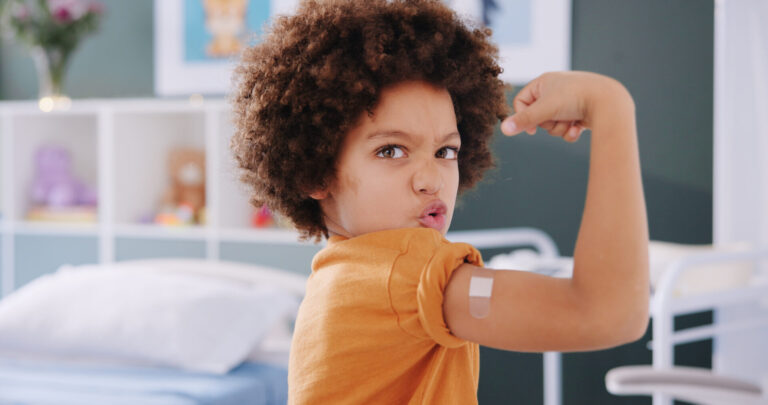
- It is true that some immunizations may cause a fever.
- All kids also respond differently to all immunizations – one child may have gotten a fever after every immunization and another child may have never gotten a fever. Just be on the lookout and ready to respond if they do occur.
- Various immunizations cause a raised temperature at different times. For example, the measles vaccine most frequently causes a temperature 7-10 days after the immunization.
- It is preferable not to use various medications for temperature control after immunizations. Studies have indicated a possible decrease in the body’s response to the immunization if antipyretics are given.
- However, if your child is extremely uncomfortable or has a very high temperature, consider giving medication.
- If your child has severe or persistent symptoms after a vaccination, contact your paediatrician immediately.
What to Do When Your Child Has a Fever?
Various methods can assist you in controlling your child’s temperature. These include using medications, increasing your child’s fluid intake, and cooling your child down.
When giving medications for a fever, it is always safest to start with paracetamol first (except if otherwise advised by your doctor due to an underlying chronic condition). Please ensure you are giving the correct dose – too little will have no effect, and too much can be harmful in the long run. If you are unsure of the dose, please contact your doctor, as the dose is worked out according to your child’s body weight.
- Medication:
- As mentioned above, start with paracetamol first, especially if the temperature is above 39°C.
- You can administer paracetamol in the form of syrups or suppositories (different mg doses above and below 1 year).Guideline to Paracetamol Dosing (according to syrup 120mg/5ml):
- < 3 months – 10mg/kg every 6 hours
- 3 months to 1 year – 15mg/kg every 6 hours or Empaped 125mg
- 1 to 5 years – 15mg/kg every 6 hours or Empaped 250mg
- 5 years – 15mg/kg every 6 hours
- Paracetamol can be given every 6 hours.
- Do not use both a paracetamol suppository and syrup, as doubling up can have severe consequences for your child.
- If the fever is not controlled by paracetamol alone, or if the fever is above 39°C, you may need to use anti-inflammatories (e.g., brufen or mefenamic acid).Certain children should not be given anti-inflammatories, including:
- Children who are highly allergic individuals.
- Children specifically allergic to anti-inflammatory drugs.
- Dehydrated children.
- Children who have bleeding problems.
- Children on anti-coagulants.
- Only recheck the child’s temperature 30 minutes to one hour after administering medication. Checking too early could lead to unnecessary additional medication.
- If the temperature continues to rise, proceed to the next measures and consider contacting your doctor.
- Increase Fluid Intake:
- During a fever, core body temperature rises, which can increase water loss through the skin.
- Ensure your child does not dehydrate by providing extra fluids during a fever.
- If your child has refused fluids for more than 6 hours, contact your paediatrician immediately.
- Cooling Down Your Baby/Child:
- Dress the baby/child in thin or light clothing to allow body heat to escape.
- Do not undress your child and put them under a fan. Medication and other methods are preferable.
- You can give your child a lukewarm bath or use tepid sponging, but never use cold water or wrap them in cold wet towels. Cold water can be counterproductive, putting stress on the body.
- Do not cover your child with blankets, even if they say they are cold. Use only a thin layer of clothing and wait for the medication to take effect.
Conclusion
Most children will experience a fever at some stage, especially after starting school and being exposed to various pathogens. Fever can be scary, especially for first-time parents. Go through all the steps above and consult your doctor if there are any danger signs (e.g., poor feeding, seizures, prolonged fever, respiratory distress, dehydration). Don’t be afraid to treat the fever, as controlling it will help your child feel more comfortable. If you are unsure or worried, consult your child’s doctor.