Fever in Children: When to Worry, When to Wait
By the team at ProPaeds Paediatricians, Nelspruit
Your child wakes up hot, flushed, and miserable. Your hand on their forehead tells you something is wrong before the thermometer confirms it. That familiar knot of worry tightens in your stomach. Is this serious? Should you go to the emergency room right now, or can you manage it at home and see how the night goes?
If you have asked yourself these questions, you are in good company. Fever is one of the most common reasons parents bring their child to us at ProPaeds, and it is also one of the most misunderstood.
This article will help you understand what a fever actually is, why it happens, and most importantly, how to tell when it needs urgent attention and when it just needs time, rest, and plenty of fluids.
What is a fever, exactly?
A fever is not an illness. It is a sign that your child’s immune system is doing its job.
When the body detects an infection, whether caused by a virus, bacteria, or another pathogen, it deliberately raises its own temperature. This is a protective response. Many bacteria and viruses struggle to survive at higher temperatures, and a warmer internal environment also speeds up the activity of immune cells.
In short, a fever is your child’s body fighting back.
A normal body temperature sits between 36.5°C and 37.5°C. A temperature of 38°C or above is generally considered a fever. Anything above 39°C is a high fever, and 40°C or above warrants prompt medical attention.
Common causes of fever in children
Most fevers in children are caused by viral infections. Colds, flu, throat infections, and gastroenteritis are among the most frequent causes. These are usually self-limiting, meaning the body resolves them on its own within a few days.
Less commonly, fevers are caused by bacterial infections such as urinary tract infections, ear infections, or pneumonia. This is why knowing how your child looks and behaves matters just as much as knowing the number on the thermometer.
When to wait: managing a fever at home
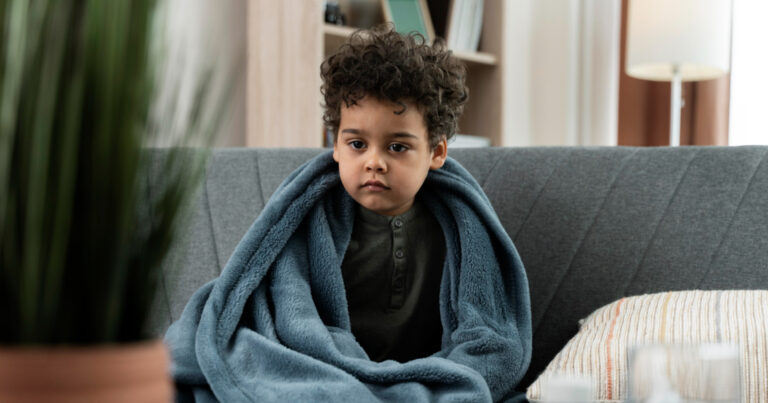
Most fevers in otherwise healthy children over three months of age can be safely managed at home, provided your child is behaving relatively normally.
Here is what “safe to monitor at home” generally looks like:
- Temperature between 38°C and 39°C
- Your child is unhappy but can be comforted
- They are drinking fluids, such as breast milk, formula, water, or diluted juice
- They are producing wet nappies or urinating normally
- They brighten up when the fever comes down with medication
- There is no rash, stiff neck, sensitivity to light, or difficulty breathing
Fever management at home
- Dress your child lightly. Bundling them in extra blankets traps heat and can push the temperature higher.
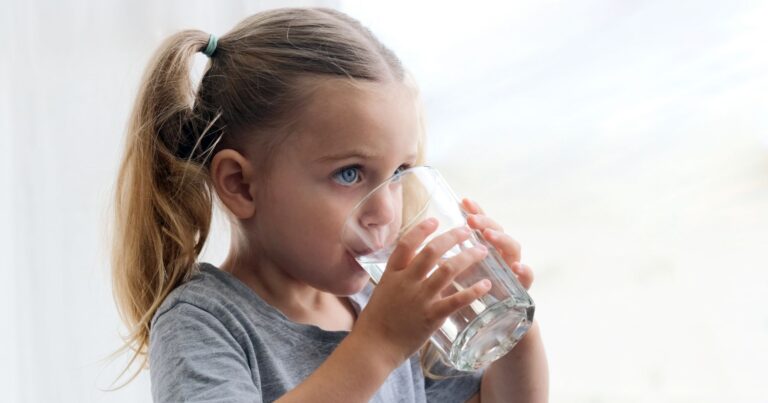
- Encourage fluids regularly. Fever causes fluid loss through sweating and faster breathing. Keeping your child hydrated is one of the most important things you can do at home.
- Use fever medication when your child is uncomfortable, not simply to bring the number down. Paracetamol, such as Panado or Calpol, is appropriate for children from 3 months of age. Ibuprofen, such as Nurofen for Children, can be used from 6 months.
- Never give aspirin to a child under 16. It is associated with a rare but serious condition called Reye’s syndrome.
- Tepid sponging can provide temporary comfort, but it does not treat the underlying fever. If you try it, use lukewarm water. Never use cold or iced water, as this can cause shivering and raise the core temperature further.
When to worry: signs that need prompt medical attention
The height of the fever alone does not always tell you how serious the situation is. A child with a temperature of 40°C who is drinking well, playing, and responding normally may be less concerning than a child with 38.5°C who is limp, refusing all fluids, and difficult to wake.
Seek urgent medical attention if your child:
- Is under 3 months old with any fever of 38°C or above. This is always an emergency.
- Is between 3 and 6 months old with a temperature above 39°C
- Has a fever lasting more than 3 days without improvement
- Has a febrile convulsion, which is a seizure triggered by fever, even if the seizure stops on its own
- Develops a rash, especially a non-blanching rash that does not fade when you press a glass against it
- Has a stiff neck, sensitivity to bright light, or a severe headache
- Is breathing rapidly, has laboured breathing, or their lips or fingertips look bluish
- Is unusually drowsy, limp, or difficult to wake
- Refuses all fluids and has signs of dehydration, such as a dry mouth, no tears when crying, sunken eyes, or no wet nappy for more than 8 hours
- Has had recent travel to or exposure to a malaria risk area
- Has an underlying health condition such as a heart defect or immune disorder, or has recently had surgery or chemotherapy
When in doubt, always err on the side of getting your child checked. No paediatrician will ever mind seeing a child who turns out to be fine.
A note on febrile convulsions
Febrile convulsions, which are seizures triggered by a rapid rise in body temperature, are frightening to witness. However, they are more common than most parents realise, affecting around 1 in 30 children between the ages of 6 months and 5 years.
Most febrile convulsions last less than two minutes, stop on their own, and do not cause brain damage or increase the risk of epilepsy.
During a seizure:
- Place your child on their side on a safe surface
- Do not hold them down
- Do not put anything in their mouth
Once the seizure stops, go straight to your nearest emergency facility or call your paediatrician, even if your child seems to have recovered.
Frequently asked questions
Should I alternate paracetamol and ibuprofen?
This is sometimes recommended to manage persistent high fevers, but it should only be done under guidance from your doctor or pharmacist. Alternating incorrectly can lead to accidental overdose.
My child’s temperature keeps going up even with medication. What do I do?
If fever medication is not bringing the temperature down at all, or if the temperature is rising above 40°C despite treatment, call your paediatrician or take your child to the emergency room.
My child’s fever broke and now it is back. Is that bad?
Fevers coming and going over two to three days is normal with many viral illnesses. If a fever returns after more than 24 hours of being completely normal, or if it persists beyond three days, it is worth getting your child checked.
When in doubt, call us
Every child is different, and every parent knows their child best. If something feels wrong, even if you cannot quite put your finger on what, trust that instinct and reach out.
The team at ProPaeds Paediatricians is here to help you navigate these moments with confidence.
This article is intended for general information purposes and does not replace professional medical advice. Always consult your paediatrician if you are concerned about your child’s health.